

Introduction: The Death of Vanity Metrics
The search domain of 2026 has fundamentally evolved. For years, ranking first on Google and maximising traffic defined success. Today, these metrics have lost their relevance.
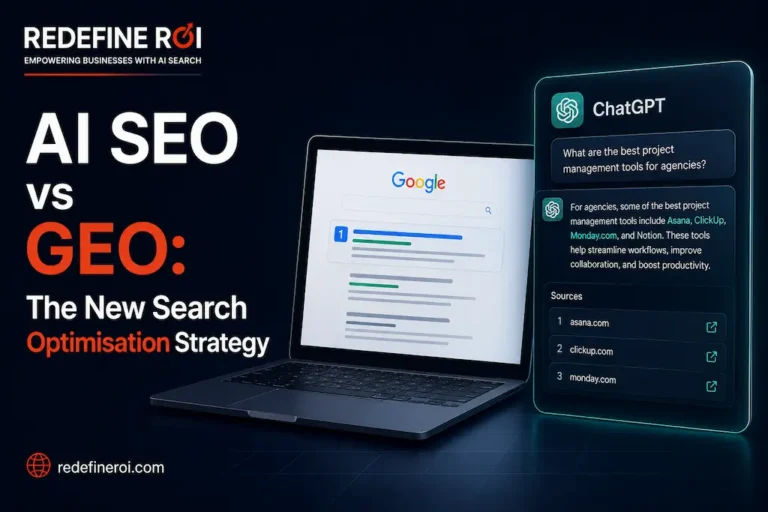
With the rise of Google’s AI Overviews (SGE) and Agentic Workflows, total organic traffic is down across almost every industry. Yet, paradoxically, revenue from organic search is hitting record highs for companies that have adapted.
If your traffic is dropping while PPC costs rise, this isn’t an SEO failure, but a traditional strategy failure. Modern SEO marketing agency services have evolved from focusing only on keywords to using revenue-attribution models that represent AI-driven ‘consensus answers.’
What you will discover inside:
The Revenue Paradox: Why a 30% drop in organic sessions can actually lead to a 15% increase in qualified leads if you optimize for the right intent.
AI-Ready Strategies: A technical roadmap to ensure your brand becomes the “consensus answer” for LLM-driven search.
ROI Attribution: How to move beyond last-click metrics and connect your SEO data directly to your sales pipeline.
The 2026 Checklist: Critical “red flags” to watch for when hiring an agency, from outdated backlink packages to a lack of pricing transparency.
Let’s Explore How These Shifts Define What an SEO Marketing Agency Delivers for Businesses in 2026
The modern SEO marketing agency role has advanced beyond algorithm manipulation. Establishing your brand as an authoritative source for both real users and AI agents is now essential. Agencies focus on four foundational pillars to achieve this:
- Technical SEO Audit: A 2026 audit goes beyond resolving issues like broken links (404 errors). It focuses on “Crawlability for LLMs,” which means assuring your website’s setup enables advanced AI models, such as large language models, to efficiently read, understand, and reference your content.
- Organic Growth Strategy: We focus on “Zero-Volume” high-intent queries. This refers to extremely targeted questions from potential users who are most likely to make a decision or even purchase, even if keyword research tools report that few or no people search for them.
- Content Marketing Services: Create human-centric content. To compete amid AI-generated noise, agencies must deliver primary research, expert interviews, and data-backed findings that large language models cannot independently replicate.
- White-Hat Link Building: We have shifted toward Digital PR, focusing on high-quality mentions on respected industry sites. It’s no longer about the number of links, but about being cited by “authoritative nodes,” or trusted sources within your field.
Digital Marketing Specialist at Redefine ROI, explains: “In 2026, traditional ‘keyword density’ is actually a liability. Google’s BERT and MUM updates now penalize content that feels ‘optimized’ for a machine. We focus on ‘Semantic Meaning’—if you don’t provide a unique, data-backed perspective, AI platforms will simply ignore you.”
The $100k Question: Is Hiring an SEO Agency Worth It?
For many growth leaders, the primary concern is clear: Is hiring an SEO agency worth it when AI answers the user’s question before they ever click on a website?
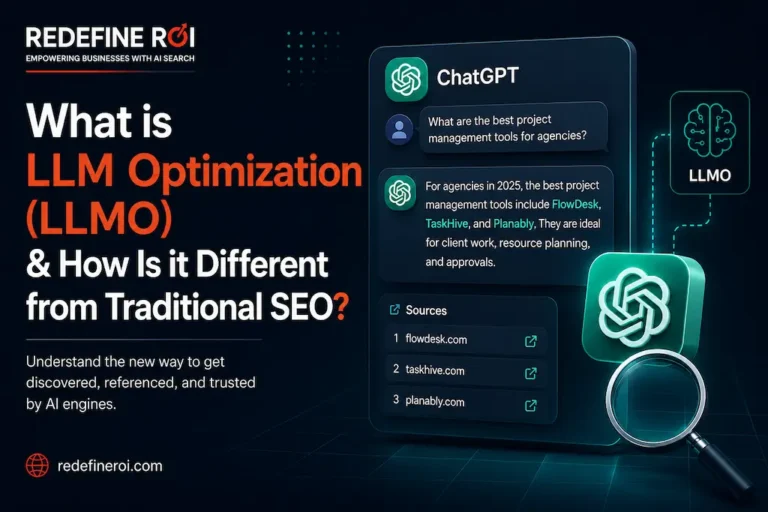
The answer lies in the SEO ROI for businesses. While AI might provide the answer, an agency ensures your brand is the source of that answer. This is what we call the “LLM Discovery & Revenue Framework.“ By positioning your brand as the cited authority in ChatGPT or Google SGE, you capture high-intent users at the exact moment of decision.
Choosing Your Path: SEO Agency vs. In-House vs. Freelancer
Choosing the ideal resource for scaling growth is a key strategic decision.
SEO agency vs in-house SEO: An in-house team offers greater control, but often operates in a vacuum. They lack the cross-industry datasets needed to predict sudden algorithm shifts. An agency provides access to enterprise-grade AI tech stacks and “early-warning” signals gathered from dozens of different accounts.
SEO agency vs freelancer: In 2026, SEO is too complex for a generalist. A revenue-focused strategy requires a synchronized team of technical architects, data scientists, and elite content creators.
While a freelancer is cheaper, an SEO agency vs freelancer comparison usually reveals that agencies offer a scalable “fractional expert team” that a single person cannot replicate. This is especially true when discussing the benefits of SEO for small businesses, where one right strategic move may surpass a year of mediocre freelance work.
How to Evaluate an SEO Agency: The 2026 Growth Checklist
Before signing a contract, use this checklist to determine how to evaluate an SEO agency:
- Revenue Reporting: Do they report on “Organic Revenue” (sales that come directly from unpaid search traffic to your website) and “Sales Pipeline” (potential sales opportunities being managed) or just “Positions” (your website’s placement in search results)?
- AI Protocol: Do they have a documented protocol for Google AI Overview (SGE) recovery?
- CRM Integration: Can they demonstrate how SEO agencies drive revenue by showing data from HubSpot or Salesforce?
- Entity Management: Do they focus on your brand’s “Knowledge Graph”—a digital map of facts about your business—and work to increase trust in your brand as an entity online?
Red Flags When Hiring an SEO Agency
Be wary of these red flags when hiring an SEO agency:
- Guaranteed Rankings: It is impossible to guarantee a website’s rank on the Google SERP or in an AI-personalized search environment.
- Algorithm Ignorance: If they aren’t talking about the January 2026 Algorithm update, they are using a 2024 playbook.
- Backlink Packages: A massive red flag. They lack ‘Relational Context.’ In 2026, if a link doesn’t come from a site with topical relevance and real human traffic, it’s at best useless and at worst a penalty risk.
If an agency tries to sell you a ‘Backlink Package’ in 2026, run. Seriously. Google’s AI models can now tell if a link has ‘Relational Context’ or if it’s just noise. Today, one mention in a high-authority industry node is worth a thousand random blog comments.
We at Redefine ROI replaced ‘link building’ with ‘Digital PR’ because the goal is actual authority, not just a higher number in a tool.
Defining Outcomes: SEO Agency Results Timeline & Pricing
SEO is an investment, not a quick fix. Understanding the SEO agency results timeline is vital for managing leadership expectations:
- Month 1: Technical & LLM Readiness. (Ensuring both technical details and AI model accessibility and availability are covered.)
- Month 2-3: Building “Topical Authority” and Semantic Clusters.
- Month 6+: Compound Revenue Growth and AI Discovery.
When it comes to SEO agency pricing, remember that “Cheap SEO” is the most expensive mistake you can make. Pricing in 2026 reflects the strategists’ seniority and the high cost of data-mining tools required to compete in the AI era.
How to Guide through the New SEO Era
Is SEO still relevant with AI search?
Yes, but the goal has changed. It’s no longer about clicks; it’s about “Brand Citations” and “Conversion-First Content.”
How do I measure SEO ROI for B2B SaaS?
By tracking “Organic First-Touch” and “Organic Assist” conversions within your CRM, rather than just looking at Google Analytics 4 sessions.
What is “Topical Depth”?
Keyword Difficulty is almost obsolete. Topical Depth—how thoroughly you cover a subject from every angle—is what determines if Google views you as an authority.
Stop worrying so much about “keyword difficulty.” That metric is outdated. Today, what really matters is topical depth. Can your content genuinely answer all the real questions a buyer has? If you cover a topic deeply and clearly, you can rank even for competitive keywords. But if your content is shallow, even “easy” keywords won’t help — LLMs will filter it out.
How do I recover from a traffic drop? Check your “Entity Trust.” If you were dropped from an AI Overview, the first “non-obvious” factor to investigate is usually your Schema Markup alignment and the consistency of your brand’s data across the web.
Conclusion: Your Partner in Organic Growth
In 2026, an effective seo growth guide is not a list of technical hacks; it is a roadmap for revenue. As search engines become more intelligent, the only way to win is to provide the best, most authoritative answer for both real users and AI agents.
Comprehensive SEO marketing agency services are now the backbone of sustainable, AI-ready growth. If you are ready to stop chasing vanity metrics and start driving measurable impact, it is time to redefine your approach.

Mrinal Kaushik
Mrinal Kaushik is the Founder of Redefine ROI, where he helps startups, eCommerce, healthcare, and B2B brands adapt to the changing world of search. With 13+ years of SEO experience and 100+ SEO audits and campaigns across WordPress and Shopify, he works with businesses to improve their visibility not just on Google, but across AI-powered search experiences like ChatGPT, Google AI Overviews, and Perplexity. Outside of client work, he enjoys exploring how AI is changing search and sharing practical insights that help businesses stay ahead of what's next.