


Last updated: May 2026
What is AI SEO?
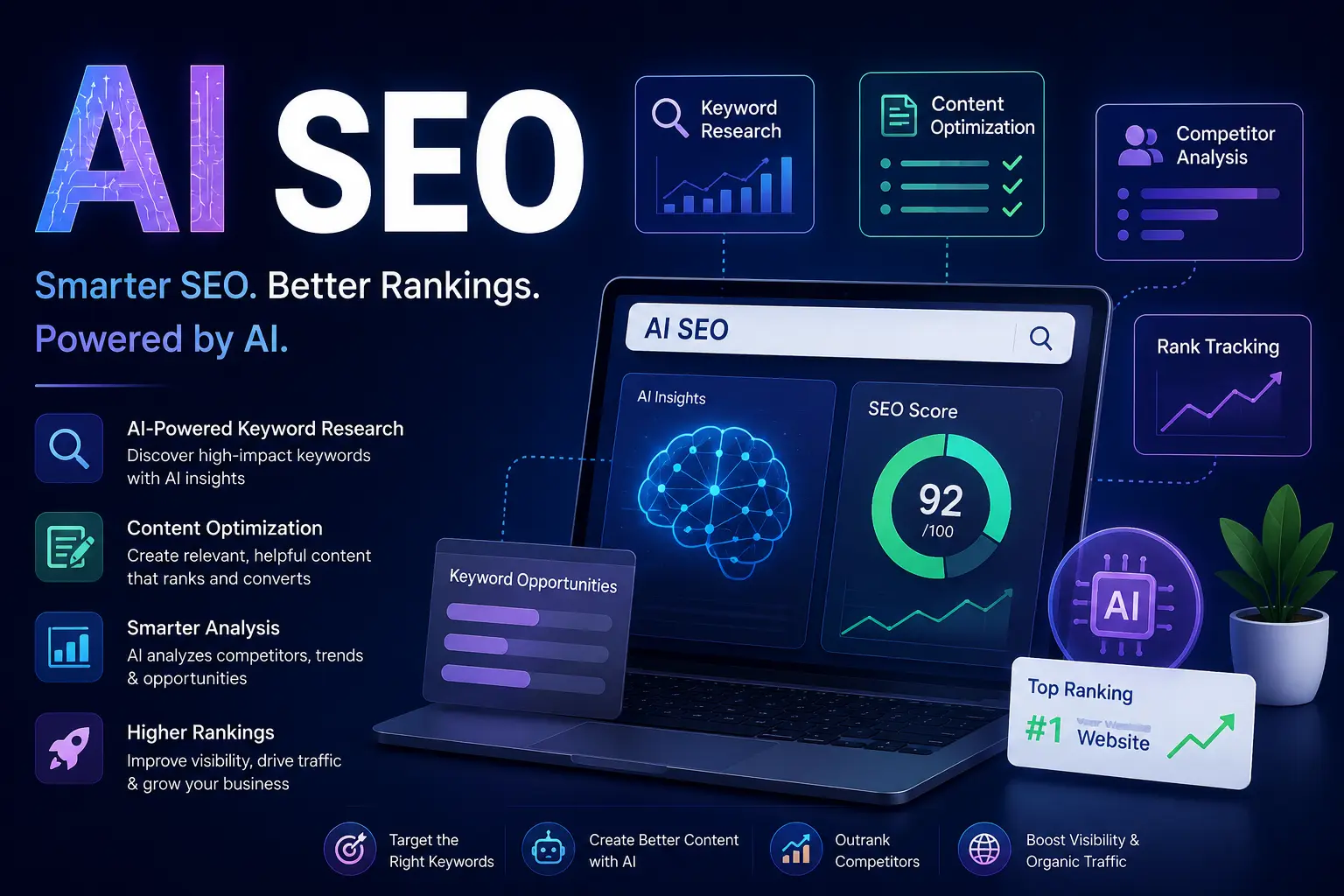
AI SEO is the umbrella term for SEO practices that optimize content for LLMs, including ChatGPT, Perplexity, Google AI Overviews, Gemini, Claude, and Copilot. It encompasses sub-disciplines such as answer engine optimization (answer extraction), Generative Engine Optimization (generative citations), and LLMO (LLM-specific optimization), without replacing traditional Google-focused SEO.
Why AI SEO Matters
The way users search for products or services has changed. Traditional SERPs still drive the majority of clicks, but brands that optimize only for traditional keyword rankings are slowly losing share to those that optimise for both traditional and LLMs.
AI SEO is not a replacement for SEO. It’s the strategic layer that ensures your existing SEO investment continues to compound beyond Google top ten blue ticks, where users increasingly start their journeys.
How AI SEO Differs From Traditional SEO
| Dimension | Traditional SEO | AI SEO |
|---|---|---|
| Goal | Rank in 10 blue links | Be cited by AI engines as a source |
| Primary Metrics/KPI | Position in SERP, organic clicks | Citation count, share of voice in AI answers |
| Discoverability | SERPS – Google, Bing organic | +AI Overviews, +ChatGPT, +Perplexity, +Gemini |
| Content Structure | Long-form, comprehensive | Structured, extractable, definition-led |
| Third-Party Signals | Backlinks, brand mentions | +Wikipedia, LinkedIn, Reddit, industry forums, and PR |
| Schema | Helpful but optional | Critical – primary extraction layer |
| Update Cadence | Quarterly is fine | Monthly for Freshness |
AI SEO Best Practices
- Implement schema markup on every page – FAQPage, Article, Organization, Service. AI engines pull or cite pages with properly structured, clean data.
- Lead every section with a direct answer in the first 1–2 sentences.
- Add original statistics with sources and years. AI engines cite original data pages at significantly higher rates.
- Build entity presence off-site – Wikipedia, LinkedIn, GitHub, industry directories, Reddit AMAs, YouTube.
- Create an author profile page with credentials. Anonymous content rarely gets cited.
- Track citation share, not just rankings. Tools: Profound, Scrunch, AthenaHQ, and Semrush AI Visibility Toolkit.
- Update older content with refreshed statistics. The freshness signal is becoming increasingly important in AI source selection.
Common AI SEO Mistakes to Avoid
- Treating AI SEO as a replacement for traditional SEO. Strong organic rankings are the precondition, not the alternative.
- Generating content with AI and publishing without a human review or an expertise layer. Both Google and LLMs detect this and devalue it.
- Optimising only for one AI engine. ChatGPT, Perplexity, AI Overviews, and Gemini have different citation patterns – multi-engine tracking is essential.
- Skipping schema. Without structured data, your content competes with everyone else’s structured content and loses.
Have Questions in Mind? Read Our Important FAQs
What is GEO (Generative Engine Optimization)?
GEO stands for Generative Engine Optimization or Generative AI optimization. It is the process of optimizing your brand’s content to appear in AI-generated responses from tools like ChatGPT, Perplexity, Gemini, and Google AI Overviews. The goal is to become the source an AI cites, not just a link a user might click.